Eli Lilly’s oral GLP-1 Foundayo enters the market at a fraction of Mounjaro’s price. Discover whether this pill expands the obesity market or risks cannibalizing premium injections.
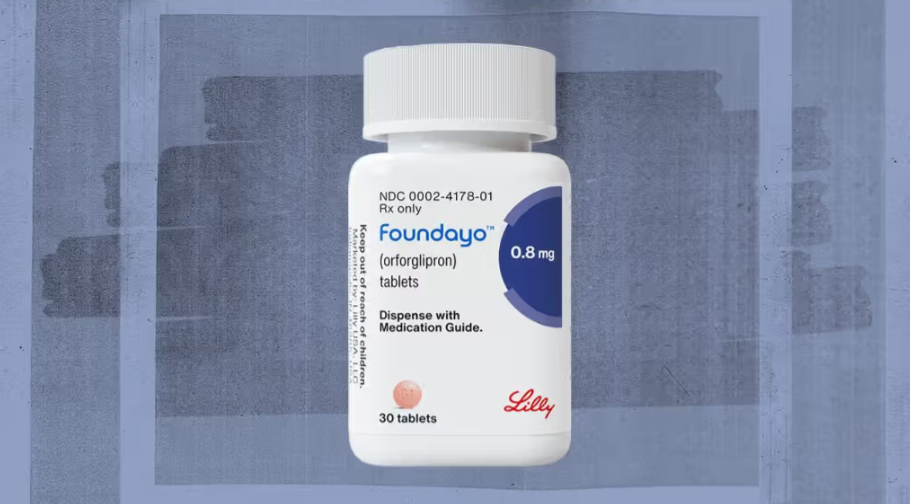
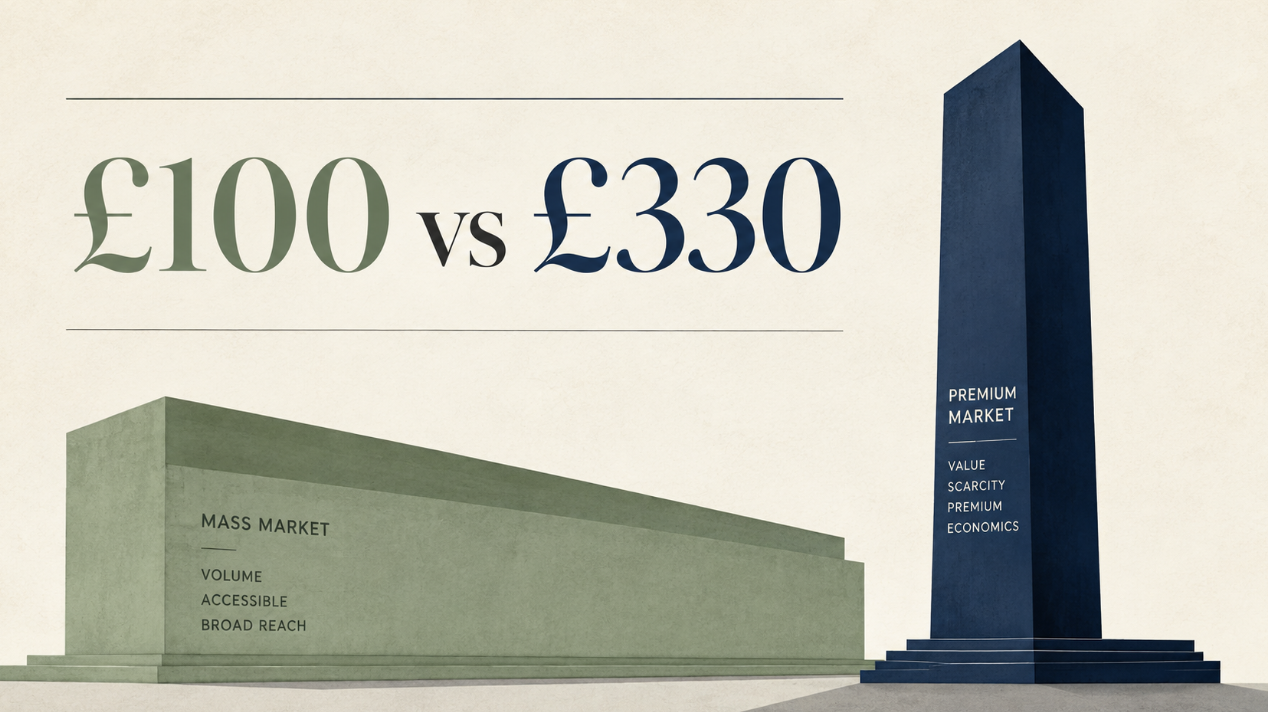
Eli Lilly’s newly approved oral GLP-1, Foundayo (orforglipron), enters the obesity market with a substantial pricing discount—costing roughly £100 to £120 a month in the UK compared to approximately £330 for Mounjaro.
While the daily tablet eliminates needle barriers and manufacturing bottlenecks, its lower price realization introduces an investor dilemma. For Foundayo to drive net revenue growth rather than dilute franchise margins, new-to-category volume must expand aggressively enough to outpace price compression and prevent the cannibalization of high-margin injectables.
Table of Contents
In the United Kingdom, Eli Lilly’s once-daily weight-loss tablet Foundayo (orforglipron) has arrived with private pharmacy pricing starting around £89 to £119 per month for initial doses. Injectable tirzepatide, sold under the brand name Mounjaro, costs patients approximately £330 per month in the same retail channels.
For patients and healthcare systems, this price gap represents an enormous breakthrough in accessibility. For investors, however, it frames a critical commercial test: Foundayo will certainly drive prescription numbers higher, but prescription volume alone does not guarantee revenue growth. If a significant portion of oral uptake comes from patients who would have otherwise taken higher-priced injectables, Eli Lilly risks trading high-margin dollars for lower-margin volume.
The Direct Answer: Market Expansion vs. Price Compression
Foundayo can significantly expand Eli Lilly's total addressable market, but its financial success must be judged by net revenue expansion, not raw script counts.
Because Foundayo carries a lower price point than Mounjaro or Zepbound, every patient who transitions from an injectable to an oral regimen reduces the gross revenue generated per patient-month. For the pill to generate incremental earnings, Eli Lilly must achieve two specific operational outcomes:
- Attract New-to-Category Patients: Capture individuals who refused injectables due to needle aversion, cold-chain logistics, or high out-of-pocket costs.
- Generate High Volume Elasticity: Expand prescription volume fast enough to offset the double-digit price deflation inherent in oral dosing schedules.
Comparing the Assets: Foundayo vs. Mounjaro
Understanding whether Foundayo will expand the market or cannibalize existing therapies requires examining how the two drugs differ across clinical efficacy, administration, and manufacturing economics.
| Metric / Dimension | Foundayo (orforglipron) | Mounjaro / Zepbound (tirzepatide) |
| Drug Class & Formulation | Small-molecule, oral non-peptide GLP-1 RA | Dual GIP/GLP-1 receptor agonist peptide |
| Administration | Once-daily oral tablet (no food/water restrictions) | Once-weekly subcutaneous injection |
| Average Weight Loss (Phase 3) | ~11.1% – 12.4% (at top approved dose) | ~20.9% – 22.5% |
| UK Monthly Retail Price | ~£89 – £129 (starter titration) | ~£330 (baseline private retail) |
| Manufacturing Advantage | Standard chemical synthesis; high-yield, low unit cost | Biologic peptide synthesis + sterile auto-injector assembly |
| Primary Target Patient | Needle-phobic, maintenance phase, price-sensitive cash pay | Severe obesity, rapid weight reduction, maximum glycemic control |
The clinical gap between the two treatments is pivotal. In 72-week Phase 3 trials, maximum-dose Foundayo demonstrated an average weight reduction of 11.1% to 12.4%, whereas Mounjaro achieved upwards of 22.5%. This efficacy differential serves as a natural barrier against indiscriminate cannibalization. Patients requiring aggressive weight loss or intensive metabolic intervention are unlikely to swap an effective 22% injectable for a 12% pill simply for convenience.
The Operational Reality: The Volume-Price Dilemma
Eli Lilly's broader commercial trajectory illustrates how pricing dynamics interact with volume growth. While total volume across Lilly’s core metabolic portfolio has surged over 60% year-over-year, realized net pricing in select international and commercial channels has experienced double-digit compression (-10% to -15%) due to mandatory government discounts, rebate tiering, and broader access agreements.
Foundayo intensifies this dynamic. As a small-molecule drug, it can be manufactured in billions of tablets using standard solid-dose facilities, bypassing the syringe filling and cold-chain constraints that have historically capped GLP-1 supply.
[Small-Molecule Pill] --> Low Production Cost + High Capacity --> Mass Volume
                                    │
                                    ▼
[Price Compression]   --> Lower Revenue per Script (£100 vs £330)
                                    │
                                    ▼
[Net Franchise Growth] Requires: Incremental Volume > Substitution Deflation
If private payers, health insurers, or public health bodies (such as the UK’s NICE) mandate step-therapy protocols—requiring patients to fail on oral Foundayo before unlocking access to Mounjaro—the revenue yield per patient will compress across the entire category.
Market Segmentation: Expansion or Cannibalization?
To determine where the financial balance lands, investors must look at four distinct patient cohorts entering the GLP-1 ecosystem:
| Cohort | Description | Economic Impact on Lilly |
| 1. Needle-Averse Incremental | Patients who refused injections entirely despite meeting clinical BMI criteria. | Pure Growth: 100% incremental revenue with minimal adoption friction. |
| 2. Self-Pay / Cash Market | Price-sensitive consumers unable or unwilling to spend £300+ / $1,000+ per month. | Volume Expansion: Captures previously priced-out demographics. |
| 3. Maintenance / Step-Down | Patients who reached their goal weight on Mounjaro and seek oral maintenance. | Margin Preservation: Keeps patients within the Lilly ecosystem rather than churning out. |
| 4. Direct Injectable Switchers | Current Mounjaro users who switch to Foundayo purely for oral convenience. | Revenue Deflation: Immediate drop in realized revenue per patient-month. |
As long as Cohorts 1, 2, and 3 dominate the prescription mix, Foundayo represents pure market expansion. Early commercial data from the drug's second-quarter launch—delivering $98 million in initial sales alongside strong introductory demand—indicates that early adopters are primarily new entrants to GLP-1 therapy rather than churned tirzepatide patients.
What Investors Should Watch Next
Over the next two to four quarters, monitoring raw script numbers will not be enough to evaluate Eli Lilly’s oral GLP-1 strategy. Investors should focus on three specific commercial signals:
- New-to-Category Prescription Ratios: Track the proportion of Foundayo prescriptions written for GLP-1 naive patients versus patients switching from injectables. An incremental ratio above 70% confirms healthy market expansion.
- Payer Step-Therapy Mandates: Watch whether major health plans and national health authorities (like NICE in the UK) require patients to start with oral therapy before authorizing tirzepatide reimbursement.
- Gross-to-Net Realization & Margin Mix: Ensure that the lower production cost of small molecules successfully shields operating margins as lower-priced tablets become a larger percentage of total obesity volume.
Frequently Asked Questions
Q1: How much does Foundayo cost compared to Mounjaro in the UK?
In private UK pharmacies, Foundayo starting doses are priced around £89 to £119 per month (£100–£120 average titration range), while Mounjaro injections typically cost around £330 per month.
Q2: Is Foundayo as effective as Mounjaro for weight loss?
No. In clinical trials, top-dose Foundayo produced an average weight loss of approximately 11.1% to 12.4%, whereas Mounjaro achieved upwards of 20% to 22.5%. Foundayo trades peak efficacy for convenience, lower cost, and non-invasive pill administration.
Q3: Will Foundayo cannibalize Mounjaro sales?
Cannibalization is expected to be limited among patients needing substantial weight loss due to the efficacy gap. However, if insurers enforce step therapy requiring oral treatment first, realized revenue per patient across the franchise could be delayed or compressed.
Did Google Just Hand Marvell $120 Billion? What the Filing Actually Says
Did Google Just Hand Marvell $120 Billion? What the Filing Actually Says
더보기Google did not hand Marvell $12.2B in cash, and Marvell has $0 in guaranteed revenue. Here is what the SEC Form 8-K warrant deal actually proves.Financial headlines went wild over Google’s "$120 billion AI chip deal" and "$12.2 billion Marvell s
global.kkomccom.com
The USMCA Exemption Myth: Why Section 338 Hits Canadian Goods with 50% Tariffs
The USMCA Exemption Myth: Why Section 338 Hits Canadian Goods with 50% Tariffs
더보기Holding a USMCA Certificate of Origin will not block America's 50% Section 338 tariff. Learn how duty stacking overrides preferential trade rules and why 554 Canadian tariff lines are exposed. A USMCA Certificate of Origin eliminates normal baseli
global.kkomccom.com